AnZa Espresso Machine Review: Is It Worth It?
 by Ella, Barista Trainer · Updated
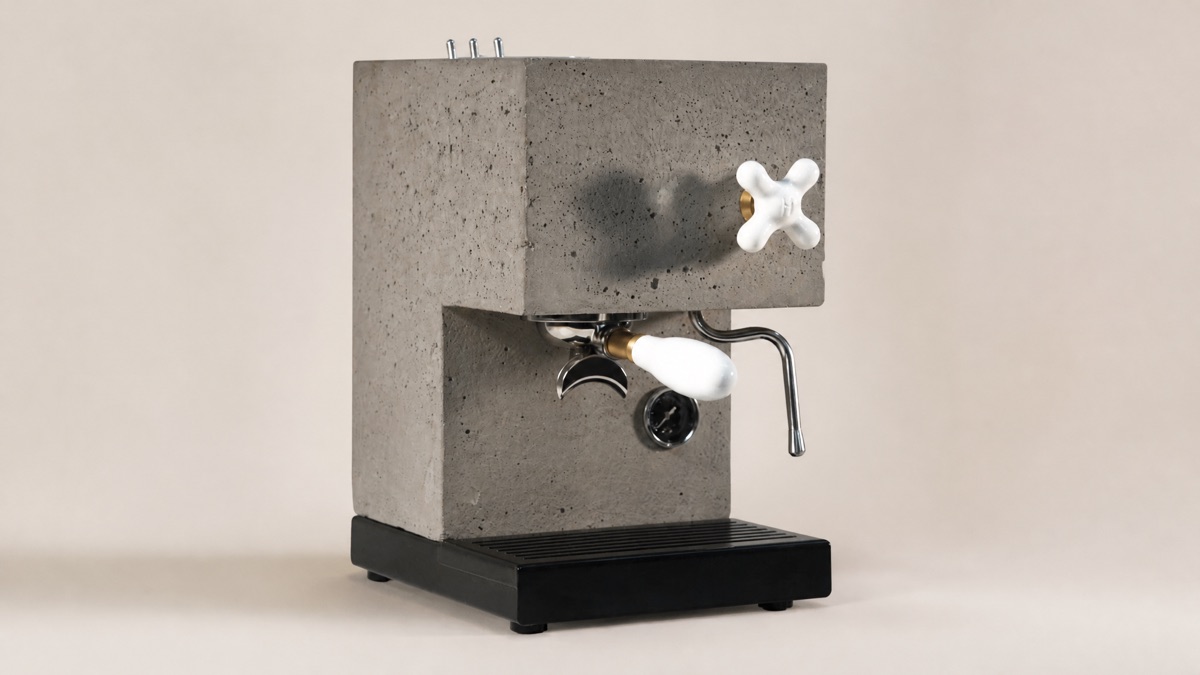
Hi there, Ella here, a Dutch barista trainer with a closer look at the AnZa espresso machine. When I size up concrete-bodied espresso machines, the Rancilio Silvia is my reference point.
The AnZa espresso machine is a home espresso machine with a hand-cast concrete shell and porcelain, brass and glass parts. Designers at the Berkeley studio Montaag launched it on Kickstarter in 2017, where 201 backers pledged $145,326. The current R2 adds a lift-out glass water tank.
A PID boiler holds 93 °C (199.4 °F). Brew pressure adjusts from 8 to 12 bar (116 to 174 psi). Pre-infusion wets the coffee before full pressure arrives. The 58 mm portafilter takes standard baskets and tampers. Concrete needs wiping after spills, and the single boiler switches between brew and steam. A separate grinder is required.
Arjé lists the machine at $1,365 as a final sale, and a grinder lifts the total to $1,914. I cover build and materials, espresso and steam performance and price and warranty, then give my verdict. Nobody sponsored it.
What Is the AnZa Espresso Machine?
The AnZa espresso machine is a home espresso machine with a hand-cast concrete shell, designed in Berkeley, California. Porcelain touchpoints, brass hardware and a glass water tank complete the build.
The idea started in a shared Berkeley workspace. Montaag designers worked beside an espresso repair shop. Every machine that came into the shop was finished in stainless steel. That sight raised the question of a different material, and concrete became the answer.
The AnZa is a semi-automatic, single-boiler machine. The owner grinds, doses and tamps by hand. Dosing means measuring out the coffee, and tamping means pressing it flat in the basket. The machine takes ground coffee only.
The AnZa launched on Kickstarter between August 7 and September 6, 2017. A total of 201 backers pledged $145,326 against a $130,000 goal.
The first run came in two versions. One used hand-cast concrete. The other used white Corian, a DuPont material, with natural wood and brass parts.
Who Makes the AnZa Espresso Machine?
Anza Studios makes the AnZa espresso machine from Stavanger, Norway. European listings name Anza AS of Stavanger as the manufacturer.
The machine began as a design project at Montaag, a design studio in Berkeley founded in 2013. Per Ivar Selvaag leads the design. He worked as a car designer for BMW and Peugeot before joining Montaag.
Andrew Smith co-founded the AnZa with Selvaag. Both worked at Montaag in Berkeley when the project began.
The neighboring repair shop, Kanen Coffee, lent coffee expertise. Four years of testing and refinement followed before the production machines were made.
How Does the AnZa Espresso Machine Work?
The AnZa espresso machine works by pushing PID-controlled hot water through coffee in a 58 mm portafilter. A pump drives the water, and a gauge shows the pressure.
A PID controller, short for proportional-integral-derivative, holds the boiler at 93 °C (199.4 °F). The controller reads the water temperature and switches the heater on and off to keep it steady.
A 15 bar ULKA pump drives the water. The 15 bar rating is the pump's ceiling, and the brew pressure sets lower.
On the current model, brew pressure adjusts between 8 and 12 bar (116 to 174 psi). Pre-infusion wets the coffee gently before full pressure arrives. This helps water flow evenly through the puck.
Switches on top separate hot water, brew and steam. A pressure gauge sits beside the brew group, so the pressure can be checked during a shot. The glass water tank lifts out for filling.
Steam comes from a thermocoil, which produces it on demand. The steam runs through a detachable wand.
How Is the AnZa R2 Espresso Machine Different From the Original?
The AnZa R2 espresso machine is different from the original because Montaag reworked it nearly seven years later.
The R2 keeps the concrete shell of the original. The R2 adds a removable glass water tank and a steam wand that stays cooler to the touch.
A US retailer lists the North America model with a 15 bar ULKA pump and a 1,050 W heating element. The listed brew temperature is 199.4 °F.
Not every listing gives the same heating element rating. Figures range from 1,050 W to 1,350 W. Buyers confirm the figure for the unit on sale.
What Are the AnZa Espresso Machine's Features?
The AnZa espresso machine features a concrete shell, a PID boiler, a pressure gauge, a 58 mm portafilter and a glass tank. Brass and porcelain details finish the design.
The machine measures 15.5 inches tall, 9.5 inches wide and 13.5 inches deep (39.4 by 24.1 by 34.3 cm). The machine weighs 48 lb (21.8 kg).
The machine brews at a temperature of 93 °C (199.4 °F). The brew pressure runs from 8 to 12 bar (116 to 174 psi). The 58 mm portafilter holds the coffee that the hot, pressurized water passes through.
Key Specifications:
| Spec | Value |
|---|---|
| Height | 15.5 in (39.4 cm) |
| Width | 9.5 in (24.1 cm) |
| Depth | 13.5 in (34.3 cm) |
| Weight | 48 lb (21.8 kg) |
| Brew temperature | 93 °C (199.4 °F) |
| Brew pressure | 8 to 12 bar (116 to 174 psi) |
| Portafilter | 58 mm |
| Voltage (North America) | 120 V |
The steam knob and portafilter handle are porcelain. The drip tray and frame are steel. The steam wand detaches for cleaning.
The North America model runs on 120 V and fits Type A and Type B wall sockets.
Each machine is cast by hand. Coloration and finish vary from one unit to the next.
What Is the AnZa Espresso Machine Concrete Body Made Of?
The AnZa espresso machine body is made of hand-cast concrete combined with porcelain, brass, steel and glass.
Concrete is poured into wooden forms, so the wood leaves its mark. The newer machines show the marks of the wood the concrete was cast against. The grain stays visible on the grey surface.
The white version is made of Corian, a stain-resistant, nonporous material developed by DuPont. Corian also forms touchpoints on the concrete version.
Selvaag chose concrete because he regards it as an honest material.
Does the AnZa Espresso Machine Make Good Espresso?
Yes. The AnZa espresso machine makes good espresso with a PID boiler, adjustable pressure, pre-infusion and a 58 mm portafilter.
The espresso earns praise for its quality. A PID is a controller that keeps the boiler at a set heat. The PID supplies consistent water temperature from one shot to the next.
Water pressure shapes the shot as well. Café espresso is commonly brewed at about 9 bar. The 8 to 12 bar range brackets that standard. Pre-infusion, which wets the coffee gently before full pressure starts, is also included.
The coffee sits in the 58 mm portafilter, the handle that holds the basket of grounds. The portafilter takes standard baskets and tampers. Basket choice becomes a tuning tool, as on café machines.
Shot time and yield depend on the grinder and the dose. The dose is the weight of coffee in the basket. The owner dials both in. Grind quality sets the ceiling for the shot.
Can the AnZa Espresso Machine Steam Milk?
Yes. The AnZa espresso machine can steam milk through a detachable wand fed by a thermocoil that makes steam on demand.
A separate switch on top controls steam. Hot water and brew each have their own switches, so each job starts on its own.
The steam wand on the R2 stays cooler to the touch than the earlier wand.
The original design used one 300 ml boiler for both brewing and steaming.
How Do You Clean and Care for the AnZa Espresso Machine?
The AnZa espresso machine stays clean with a dry cloth for dust and a damp cloth for the concrete.
Concrete is porous and absorbs liquids. Spills get wiped up immediately, and acidic cleaners stay away from the surface.
Untreated brass develops a natural patina. A dry cloth removes dust, and a brass polish restores the shine.
Descaler is acidic, so it stays off the concrete. The steam wand gets purged and wiped after every milk drink.
Lacquered brass needs only a soft, dry cloth. The maker describes concrete as a raw material that must not be saturated.
Does the Concrete on the AnZa Espresso Machine Stain?
Yes. The concrete on the AnZa espresso machine can stain because the porous material absorbs liquids.
Concrete is full of tiny openings, so spilled liquid soaks in instead of sitting on the surface. The concrete also changes color over time. The maker calls the resulting patina part of the character.
Coloration also varies from one unit to another, so no two machines age alike.
The white Corian version offers a stain-resistant, nonporous alternative. Because liquid cannot soak into it, spills stay on the surface.
What Are the AnZa Espresso Machine's Drawbacks?
The AnZa espresso machine's drawbacks are its price, its 48 lb (21.8 kg) weight, porous concrete and missing grinder.
The US retailer Arjé lists the machine at $1,365 as a final sale. The listing offers no return path.
The weight means the machine stays on the counter. Moving it for cleaning or storage takes effort.
Porous concrete takes on stains and patina. The surface needs wiping after every spill.
The machine has no built-in grinder. A separate grinder adds to the total cost.
Main Drawbacks:
- High price with final sale terms
- Heavy 48 lb (21.8 kg) body
- Porous concrete that stains
- No built-in grinder
Anza AS of Stavanger, Norway makes the machine, so buyers outside Norway ask about service and parts before ordering.
Is the Single Boiler on the AnZa Espresso Machine a Problem?
No. The single boiler on the AnZa espresso machine is a minor problem on the R2 because a thermocoil makes steam on demand.
A single boiler has to serve two jobs, brewing and steaming, and each needs a different temperature. The machine must switch between them. That switch costs waiting time between a shot and the milk.
The PID is a controller that keeps the heater at a set temperature. The PID holds the boiler at 93 °C (199.4 °F) for brewing. Shot temperature stays steady from one cup to the next.
The boiler holds about 300 ml.
How Does the AnZa Compare to Other Espresso Machines?
The AnZa espresso machine compares to other espresso machines as a design-first product with café-standard parts.
Most espresso machines wear stainless steel. The AnZa swaps that for concrete, brass, wood and porcelain. The parts inside follow café norms.
The 58 mm portafilter is one of those norms. The portafilter is the handle that holds the coffee, and many home and café machines use the same size. Baskets and tampers carry over between brands.
The feature list follows the Faema E61 tradition of steady heat and pre-infusion, built with modern parts. The E61 of 1961 brought an electric pump and a thermosyphon that kept the brew group at temperature.
The Lelit Anna is a single-boiler machine with PID control, a 250 ml boiler and a 57 mm portafilter. The Anna portafilter is one millimeter smaller than the AnZa portafilter.
The Rancilio Silvia is a stainless steel single-boiler rival. The Silvia has a 58 mm portafilter and a brass boiler of 12 fl oz (355 ml). Its 2-year limited warranty is stated on the retailer page. The Gaggia Classic Pro also uses a 58 mm portafilter, a single dual-use boiler and a 15 bar vibration pump.
Rival Machines:
| Machine | Boiler | Portafilter | Body |
|---|---|---|---|
| AnZa | Single boiler, about 300 ml | 58 mm | Concrete |
| Lelit Anna | Single boiler, 250 ml | 57 mm | Stainless steel |
| Rancilio Silvia | Single boiler, 12 fl oz (355 ml) | 58 mm | Stainless steel |
| Gaggia Classic Pro | Single dual-use boiler | 58 mm | Stainless steel |
Heat-exchanger and dual-boiler machines brew and steam together. A single-boiler machine like the AnZa switches between the two jobs.
What Grinder Pairs With the AnZa Espresso Machine?
The AnZa espresso machine pairs with any espresso grinder because the machine has no built-in grinder.
The machine leaves grinding to a separate unit. One retailer sells the R2 in a bundle with the Eureka Mignon Specialita. The grinder is silent, has 55 mm flat burrs and offers stepless adjustment.
Stepless adjustment means the grind can be changed in tiny amounts, not in fixed steps. Fine control matters when dialing in shots, which means adjusting the grind until the espresso tastes right.
A 58 mm concrete tamper is sold for the machine. The tamper also fits other 58 mm baskets.
How Much Does the AnZa Espresso Machine Cost?
The AnZa espresso machine costs $1,365 at a US retailer, with free shipping on US orders.
The listing marks the machine as in stock. That retailer treats the sale as final, so a buyer cannot count on returning it.
The machine does not include a grinder, so a buyer must pay for one. The Eureka Mignon Specialita lists at $549. Machine and grinder together total $1,914.
The concrete tamper is a separate purchase. Accessories add to the price of the machine.
A cheaper machine can lower the starting cost. The Rancilio Silvia, a stainless steel single-boiler machine, lists at $995. That price sits $370 below the AnZa.
Price Comparison:
| Item | US Price |
|---|---|
| AnZa espresso machine | $1,365 |
| Eureka Mignon Specialita grinder | $549 |
| AnZa and grinder together | $1,914 |
| Rancilio Silvia | $995 |
Is the AnZa Espresso Machine Worth the Price?
Yes. The AnZa espresso machine is worth the price for buyers who value a hand-cast concrete design alongside café-standard parts.
Each unit is cast by hand, so every machine differs in color and finish.
The 48 lb (21.8 kg) weight comes from the concrete shell.
The specification list covers PID control, adjustable pressure and pre-infusion.
Where to Buy the AnZa Espresso Machine?
Buyers can buy the AnZa espresso machine from the maker's website, from Arjé or from European design retailers.
Where to Buy:
- The maker's website
- Arjé in the United States
- European design retailers
Arjé ships free within the United States. International shipping runs through a custom quote by email.
The US model runs on 120 V. A separate version with an EU plug serves Europe.
Stock changes often. One European retailer lists the concrete machine as out of stock.
What Warranty Covers the AnZa Espresso Machine?
The AnZa espresso machine lists no warranty terms on the US or European retailer pages checked.
The US retailer marks the sale as final.
The European retailer points only to the legal guarantee notice for EU buyers.
EU law gives buyers a legal guarantee of at least 2 years from delivery. Claims go to the seller, and a defect within the first year is presumed present at delivery.
US buyers ask Arjé or Anza AS for written terms before paying, since the listing is a final sale.
Is the AnZa Espresso Machine Worth It?
Yes. The AnZa espresso machine is worth it for buyers who want a concrete centerpiece with café-standard parts.
A PID boiler holds water at 93 °C (199.4 °F). Pressure is adjustable from 8 to 12 bar, and pre-infusion wets the coffee gently before the full pressure begins. The machine also has a 58 mm portafilter and a lift-out glass tank.
The price is high. The body weighs 48 lb (21.8 kg), so it is hard to move. The concrete is porous, which means it can stain. There is no built-in grinder. The warranty terms are unconfirmed.
Pros:
- PID boiler at 93 °C (199.4 °F)
- Adjustable 8 to 12 bar pressure
- Pre-infusion
- 58 mm portafilter
- Lift-out glass water tank
Cons:
- High price
- Heavy 48 lb (21.8 kg) body
- Porous concrete
- No built-in grinder
- Unconfirmed warranty terms
The white Corian version avoids the stain risk of concrete, when stock is available.
The real cost is $1,914 once the Eureka Mignon Specialita grinder joins the machine.
Stainless steel machines are easier to clean. Buyers who rank upkeep or price first fit them better.
Who Should Buy the AnZa Espresso Machine?
Design-minded home baristas should buy the AnZa espresso machine to keep on show on the counter.
Owners need a steady habit of wiping the concrete and a separate grinder.
The US model needs a 120 V outlet.
The Exploring Barista is reader-supported. Purchases made through links on this page may earn us an affiliate commission at no extra cost to you.