9Barista Espresso Machine Review: Is the Stovetop Maker Worth It?
 by Ella, Barista Trainer · Updated
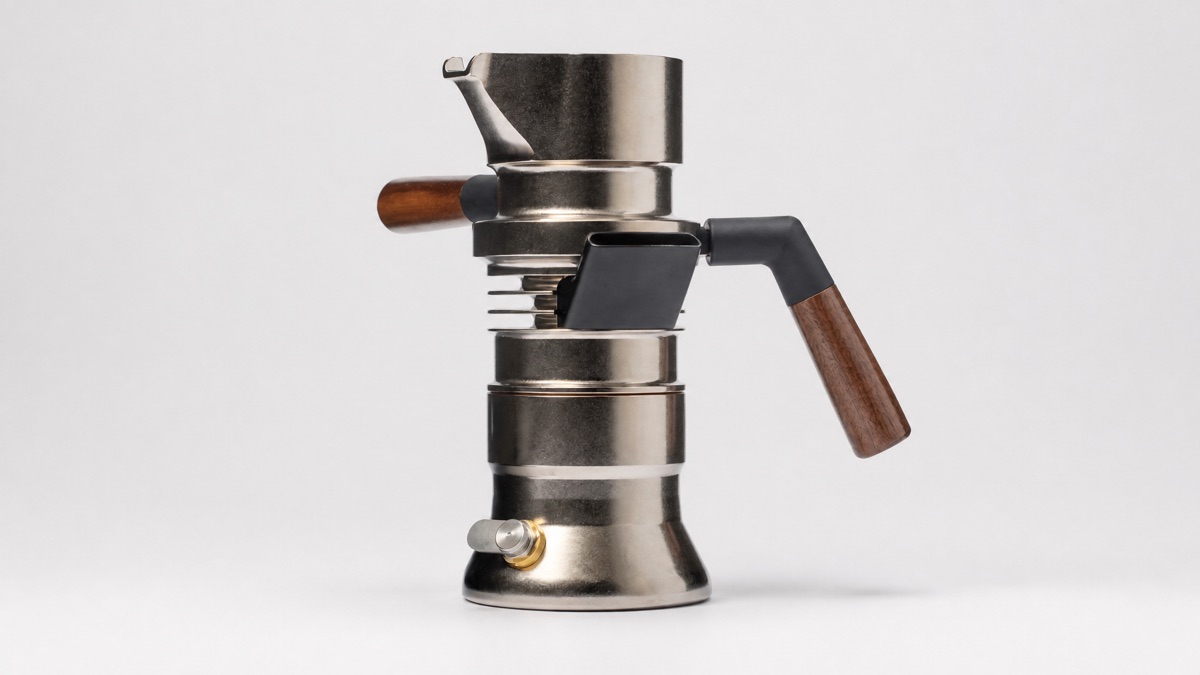
The 9Barista is a stovetop espresso maker designed by jet engine researcher William Playford in Cambridge, UK. Its twin-boiler system brews at 9 bar of pressure and 93°C (199°F) with no electricity. The range includes the Mk.1 and the Mk.2 in Standard and Pro trims.
Hi, I'm Ella, a barista trainer from the Netherlands. I spent seven years behind espresso bars, so I judge stovetop espresso makers by what lands in the cup.
The machine makes café-grade shots with real crema when paired with a good grinder. It steams no milk, cycles slowly and needs a stove. The Mk.2 adds a 5 year warranty and harder-wearing parts. US prices run from $599 to $699 for the Mk.2.
Heavy weight, fixed settings and hot metal affect daily use. Here I go through the brewing mechanism, shot quality and running costs. No brand paid for this review. A final verdict shows who should buy the 9Barista and who should pass.
What Is the 9Barista Espresso Machine?
The 9Barista espresso machine is a stovetop maker with a patented twin-boiler system, no electronics and one moving part. The machine brews at 9 bar of pressure and 93°C (199°F). The maker says those figures match café conditions.
That pressure number matters so much that it became the product name. The 9 in 9Barista stands for 9 bar.
A moka pot, the screw-together pot that bubbles coffee up on the stove, is the usual stovetop comparison. Real crema forms on the 9Barista shot, which a moka pot cannot deliver.
The parts that hold that pressure are all metal. The boiler holds a maximum of 120 ml (4.1 fl oz) of water.
All that metal makes the machine heavy for its size.
Buyers do not choose from a single model. The range has two generations, which split into three buying options:
- Mk.1: This is the original machine. It now sells as a final batch and as refurbished units.
- Mk.2 Standard: This is the current model in its base trim.
- Mk.2 Pro: This is the current model in its higher trim.
The missing power cord and the small footprint show who the machine suits. The audience is coffee fans who want real espresso without a pump or a plug. Small kitchens and travelers benefit most. The machine needs a stove and an espresso burr grinder. That means a grinder that can produce the fine, even grind espresso calls for.
Who Designs and Builds the 9Barista?
William Playford designed the 9Barista after jet engine research, and the company builds it in Cambridge, UK. He founded the company and applied aerospace principles to stovetop espresso. The brand calls the result the first jet-engineered stovetop espresso maker.
That training shaped the machine. Playford studied mechanical engineering. He then did post-graduate research on jet engine design at the Whittle Laboratory at Cambridge University. Turning those ideas into a working espresso maker took five years.
A finished design still needed buyers. The 9Barista debuted at the London Coffee Festival in 2019, and the stand received 200 pre-orders there. Batch sizes later increased from 200 units to 1,500.
James Hoffmann, the 2017 World Barista Champion, reviewed the machine on YouTube in July 2020. His video drew nearly 1.5 million views, and sales rose by a factor of 10 afterward. Hoffmann praised how the pressure and temperature system works. The maker thanked him and corrected his heat-up time.
Technicians test every machine in the factory, and the maker states that each unit passes more than 150 inspections before shipping. Protolabs molds small parts such as the handle bushes and the group head insulator.
The maker claims over 20 million espressos made worldwide. The figure comes from the brand itself. Independent testers still report that the machine performs as described.
How Does the 9Barista Work?
The 9Barista works by turning stove heat into 9 bar of pressure inside a lower boiler. The lower boiler heats water to 179°C (354°F). A spring-loaded valve opens at that pressure and drives the water upward.
Water boils far above 100°C once pressure rises. A pressure cooker uses the same principle. Nine bar equals about 130 psi.
A coil heat exchanger cools the water to 100°C (212°F) while pressure holds. The coil sits in boiling water, which is cooler than the pressurized water inside it. Heat flows from hot to cold. That bath stays at 100°C.
A fin heat exchanger cools the water a second time. The fins lower the temperature to 93°C (199.4°F) before the water reaches the coffee. Ambient air cools the water.
The cooled water then passes through the coffee puck at full pressure. Espresso bubbles up into the cup on top of the machine. The valve is the only moving part in the whole system.
How the water travels:
- The lower boiler heats water on the stove to 179°C (354°F).
- The spring-loaded valve opens at 9 bar of pressure.
- The coil heat exchanger cools the water to 100°C (212°F).
- The fin heat exchanger cools the water to 93°C (199.4°F).
- The water crosses the coffee puck and espresso rises into the cup.
No pump moves the water. Pressure alone moves it through the coil, the fins and the puck.
Does the 9Barista Need Electricity?
No. The 9Barista does not need electricity because it runs entirely on stove heat with no plugs, pumps or electronics. Heat from a burner powers the brewing.
That heat can come from any common stove, and the stove section below lists the compatible types. Only induction needs an extra plate.
A mechanical valve controls the pressure. Nothing electronic can fail, so the machine has no circuit board, no pump and no heating element to replace.
The missing pump also changes how the machine sounds. Operation stays quiet because no pump runs. A gurgle marks the start of extraction around the five-minute mark.
A machine with no plug and no pump can be used wherever there is heat. A van, a cabin or a camp site with a burner is enough. One tester brewed shots on a camp stove and called the kit perfect for camping.
How Long Does a 9Barista Shot Take?
A 9Barista shot takes a long 3 to 6 minutes from cold, plus 25 to 30 seconds of extraction. The spec sheet lists that range, and the stove sets how long a shot takes within it. The machine needs no pre-heat routine.
That range covers one shot from cold. Back-to-back shots take longer. One owner's morning routine shows the gap: about 5 minutes for the first cup, then about 8 minutes of waiting before the second. That owner brews two shots every morning.
A faster method exists. The maker says grinding and tamping during that time cuts a cycle to about 4 minutes per shot. The maker adds that this works well for two shots in a row.
The maximum time on the stove is 8 minutes. After brewing, the boiler cools under running water. That step lowers the internal pressure.
What Are the 9Barista Mk.1 and Mk.2 Specs?
The 9Barista Mk.1 and Mk.2 specs list 9 bar, 93°C (199°F) and a 53 mm (2.1 in) basket. The dose is 17 to 20 g (0.6 to 0.7 oz) of coffee. The shot output is 40 to 45 g (1.4 to 1.6 oz), about 40 ml (1.4 fl oz).
One brew cycle makes one large double shot. The maker rates that shot at 40 to 45 g (1.4 to 1.6 oz). Each cycle uses 110 to 120 ml (3.7 to 4.1 fl oz) of water.
The body is about 18 cm (7 in) tall and weighs about 1.8 kg (4 lb). One handle sticks out, so the width is about 19 cm (7.5 in).
The Mk.1 uses nickel-plated brass and stainless steel with walnut handles. The Mk.2 uses EcoBrass, 304 stainless steel, anodised aluminium, ceramic and silicone. EcoBrass is the maker's name for its harder-wearing brass alloy. The Mk.2 boiler uses nickel-plated EcoBrass, which the maker calls 30% harder wearing.
The box holds six items:
- The machine: The brewer itself comes in the box.
- 53 mm tamper: A 53 mm tamper is included.
- Heat transfer plate: One plate ships with the machine.
- Spare boiler O-ring: One spare ring for the boiler is included.
- Spare safety ring: A second spare ring comes with it.
- User guide: The guide completes the box.
One important tool is not on that list. A burr grinder designed for espresso is highly recommended.
Key Specs:
| Spec | Value |
|---|---|
| Brew pressure | 9 bar |
| Brew temperature | 93°C (199°F) |
| Dose | 17 to 20 g (0.6 to 0.7 oz) |
| Shot output | 40 to 45 g (1.4 to 1.6 oz) |
| Water per cycle | 110 to 120 ml (3.7 to 4.1 fl oz) |
| Basket | 53 mm (2.1 in) |
| Height | About 18 cm (7 in) |
| Weight | About 1.8 kg (4 lb) |
Which Stoves Work With the 9Barista?
The 9Barista works on gas, electric halogen, electric ring, traditional Aga or Rayburn and camping gas stoves. Induction hobs work with an adaptor plate. The Mk.2 ships with either plate, chosen at purchase.
The induction plate is a separate part of the kit. One induction test needed that plate to run the machine.
Gas offers the most control. An open flame lets the user adjust heat quickly. Electric burners need a bit more tweaking to find the right setting.
Heat control matters. Too much heat makes the machine spill hot water out of its vapor exhaust. One owner brews on a medium-high setting.
Compatible Stoves:
- Gas
- Electric halogen
- Electric ring
- Aga or Rayburn
- Camping gas
- Induction with adaptor plate
Is the 9Barista Mk.2 Better Than the Mk.1?
Yes. The 9Barista Mk.2 is better than the Mk.1 on durability, finish and warranty. The Mk.2 Standard adds fully machined castings and EcoBrass that wears 30% better. A steatite ceramic thermal break resists heat 500% better.
The Mk.2 also adds an anodised aluminium chimney and a boiler O-ring 50% larger. The ring increases from 2 mm (0.08 in) to 3 mm (0.12 in). The warranty rises from 2 years on the Mk.1 to 5 years on the Mk.2. Refurbished Mk.1 units carry 1 year.
The Mk.2 Pro adds three extras. A 53 mm IMS basket, a laser-drilled basket cap and a naked portafilter come with it. The maker claims 75% more uniform extraction from the cap and a 230% larger portafilter aperture.
The Mk.2 Standard keeps the standard portafilter, the 53 mm basket, a silicone basket cap and wooden handles. The Pro swaps in a stainless steel basket cap and anodised aluminium handles.
Brew performance stays equal. Both models brew at 9 bar and 93°C. The maker says the Mk.1 delivers the same engineering at a lower price.
Some Mk.2 parts fit the Mk.1. The anodised aluminium chimney, the handles and the stainless basket cap are compatible. Structural upgrades such as the castings do not retrofit.
Mk.1 vs Mk.2:
| Feature | Mk.1 | Mk.2 Standard | Mk.2 Pro |
|---|---|---|---|
| Warranty | 2 years | 5 years | 5 years |
| Castings | Cast finish | Fully machined | Fully machined |
| Thermal break | Silicone | Steatite ceramic | Steatite ceramic |
| Chimney | Plastic | Anodised aluminium | Anodised aluminium |
| Boiler O-ring | 2 mm | 3 mm | 3 mm |
| Basket | Standard | Standard 53 mm | IMS 53 mm |
| Handles | Walnut | Walnut | Anodised aluminium |
Does the 9Barista Make Good Espresso?
Yes. The 9Barista makes café-grade espresso when paired with a good grinder. One tester tasted its shots side by side with a Modbar café machine. Both machines got the same coffee and the same grinder, and the shots came out nearly identical.
Michael Febbo performed that comparison at Pedal & Pour, a coffee shop. The shop uses Mahlkonig grinders, and the grinder behind those shots cost about $3,000.
The shots also look right. The crema comes out light brown. It has streaks known as tiger stripes when the grind is correct. A second tester watched an almond-colored crema appear almost immediately.
Flavor holds up too. Noah Kaufman pulled shots next to a Lelit MaraX. He found fruity and chocolatey notes in every shot. The 9Barista shots tasted slightly sharper than the MaraX shots in that test.
The grinder controls the result. The machine shows when a grinder is weak. Hoffmann advised budgeting for a suitable espresso grinder.
Consistency holds. One owner pulled about 1,200 shots in two years. That owner used a 19 g (0.7 oz) dose every time and adjusted only the grind.
Light roasts work too. Peter Wolinski tested the Mk.2 for a month with a Varia VS3 conical burr grinder. He called the shots full-bodied, rich, complex and balanced.
Aleksandar Spasevski pulled an Ethiopia natural at 18 g (0.6 oz) in and 40 g (1.4 oz) out in 28 seconds. That shot showed ripe berry sweetness. A washed Latin American coffee gave citrus and cocoa.
Does the 9Barista Really Reach 9 Bar?
Yes. The 9Barista reaches 9 bar when the lower boiler opens its valve at 179°C (354°F). A bar is a unit of pressure. That valve is held shut by a spring. Until that happens, no water moves upward.
Proof comes from the crema. One tester judged it by looking at the cup. The crema came out thick and full. The tester read that as a sign of real pressure. Still, the tester could not read the internal values, and so trusted the maker's figures.
The figures also fit steam tables. Steam tables list the boiling point of water at each pressure. They show that water under 10 bar of absolute pressure boils at 179.9°C (355.8°F). The maker's 179°C figure matches that same point. And 10 bar of absolute pressure equals about 9 bar above the surrounding air.
The brew temperature is near the standard espresso target. Temperature regulation works as designed.
The pressure profile stays flat. The machine has no pre-infusion. It has no pressure ramp either.
Can the 9Barista Steam Milk?
No. The 9Barista has no steam wand and no milk system. The machine makes espresso only. Anyone who drinks lattes or cappuccinos has to froth the milk with a separate device.
That separate device must be bought on its own, so one tester named a specific one. The suggestion was the Subminimal Nanofoamer Pro, a standalone milk frother. Keeping the frother separate has a second benefit. If the frother breaks, the espresso machine still works. An owner makes the same point.
The missing milk function also shapes how the machine scores. One tester scored the milk and steam category 1.0 out of 10. That score matches the design, because the machine has no milk function at all.
A score that low only matters to people who want milk in the cup. Straight espresso and Americano drinkers do not miss steaming. One owner and spouse drink espresso and Americanos without milk. For them the limit never matters.
What Are the Downsides of the 9Barista?
The 9Barista has five main downsides: slow cycles, heavy weight, fixed settings, hot metal and a learning curve. None of them break the machine. All of them shape daily use.
Cycle time is the first limit. The machine needs minutes to heat, and a second shot takes longer still.
Weight is the second. The empty machine weighs 1,738 g (3.8 lb), and the plate and tamper add 353 g (12.5 oz). The handles are fixed and cannot come off.
Control is the third. Only grind and dose change. Pressure, temperature and shot size stay fixed.
The metal body stays hot after brewing. One tester blistered a thumb while releasing the pressure from the machine.
Technique matters. Grinding too fine or tamping too hard can choke the machine and stop any espresso coming out.
Main Downsides:
- Slow cycles of 3 to 6 minutes to heat
- Heavy body of about 1.8 kg (4 lb)
- Fixed pressure, temperature and shot size
- Hot metal after brewing
- A learning curve with grind and tamp
Is the 9Barista Hard to Clean?
No. The 9Barista is not hard to clean and takes up to one minute by the maker's own rating. The user rinses the top section, knocks out the puck and wipes the parts.
Puck removal can frustrate. One tester pried pucks out in pieces with a butter knife or a spoon. The Pro model holds the basket in a naked portafilter, a handle with no spout. That open view makes channeling easier to spot. Channeling means water cutting a fast path through the coffee instead of soaking it evenly.
Descaling is the bigger job. Limescale, the chalky crust left behind by minerals in water, builds up in the water chamber over time. How fast it builds depends on the water. One owner descales every few months, because the local tap water is hard.
The maker sets a schedule. Light descaling happens only when limescale shows, at most once a month. A deep descale happens once a year, or every 6 months in hard water.
The maker lists three kinds of descaling acid:
- Sulfamic acid: The maker approves these descalers. Puly Descaler, Urnex Dezcal Liquid and Durgol Swiss Espresso Special Descaler all use it.
- Lactic acid: These descalers damage the plating. Using one voids the warranty.
- Citric acid: This is acceptable. It is less effective than sulfamic acid.
Disassembly feels clumsy at first. The process gets easier with practice.
How Does the 9Barista Compare to Other Espresso Makers?
The 9Barista compares to other espresso makers by trading convenience for portability and repeatability against pumps and levers. The Gaggia Classic Pro is in the same price tier. It pulls back-to-back shots and steams milk. It needs a power outlet and counter space.
The Flair Neo Flex, a hand-pressed espresso maker, costs about $99 and makes good espresso. Consistency takes a lot of practice. The 9Barista repeats shots more easily.
The Wacaco Picopresso is smaller and cheaper. The 9Barista offers better thermal stability, which means the brew water holds a steadier temperature. It also holds a fixed 9 bar pressure with less effort. The cost of that steadiness is extra weight and a higher price.
The Breville Bambino Plus costs about the same as the Mk.2. The Bambino steams milk and works at the push of a button. The 9Barista trades those comforts for two gains. It needs no electricity and takes far less space.
Manual lever presses such as the Flair and the Cafelat Robot allow pressure profiling. That means raising and lowering the pressure during the shot. They need pre-heating and careful workflow. The 9Barista trades that control for speed from cold and repeatable results.
Espresso Maker Comparison:
| Machine | Strength | Trade-off |
|---|---|---|
| 9Barista | No power cord and real 9 bar pressure | No steam and slow cycles |
| Gaggia Classic Pro | Back-to-back shots and milk steaming | Needs power and is not portable |
| Flair Neo Flex | About $99 and good espresso | Takes practice and consistency is harder |
| Wacaco Picopresso | Smaller and cheaper | Less thermal stability |
| Breville Bambino Plus | Steams milk at the push of a button | Needs power and costs about the same as the Mk.2 |
The Rancilio Silvia and similar pump machines often sell for less, one owner notes. The La Marzocco Linea Mini costs more than the 9Barista.
One cost stays the same no matter which machine a buyer picks. A good espresso grinder adds cost to every machine in this group. A tester urges buyers to count that price for any of them.
Is the 9Barista Better Than a Moka Pot?
Yes. The 9Barista is better than a moka pot on pressure, temperature control and crema. A moka pot brews near 1 bar and often over-boils the water. The 9Barista reaches 9 bar at 93°C (199°F). Those two numbers are the gap between the two brewers.
The moka pot is best on simplicity and cost. Its setup is minimal, and it costs less to buy.
The 9Barista needs more gear before the first shot. It needs an espresso grinder, a tamp and careful grind adjustment. Those steps add cost and effort. They also deliver actual espresso.
The Bialetti Moka Express is the classic moka pot. One owner of that pot says the 9Barista shares its stovetop idea but adds real pressure.
Taste reports follow the same split. One reviewer found a moka pot almost undrinkable. The same reviewer found 9Barista espresso excellent.
How Much Does the 9Barista Cost?
The 9Barista Mk.2 costs $599 for the Standard and $699 for the Pro in recent US listings. Sellers do not all charge the same, so the Standard ranges from $599 to $695 across US retailers. The maker's own UK store lists the Standard from £449.
That UK store also covers the top model, with the Mk.2 Pro from £559. Those prices include taxes and import duties. DHL Express shipping is free, and orders ship the next business day from Cambridge.
The Mk.1 is cheaper, and the maker lists it from €445. Refurbished units sell for less again.
Older write-ups quote even smaller numbers, because prices have risen over time. A 2020 report put the Mk.1 at $385. Later reviews list $499 to $549 for the Mk.1 with tamper and plate.
The machine is only part of the spend. Extra costs add up, starting with an espresso burr grinder. One costs $300 or more. A Mk.2 Standard at $599 plus a $300 grinder is about $899.
Once the kit is bought, keeping it running costs far less. Spare parts are cheap. One retailer lists a boiler O-ring at $2 and a group insulator at $13. A Mk.2 overheat repair kit costs $44.95. A bottomless portafilter, the coffee holder with no spouts underneath, costs $135 at the same retailer.
Price Guide:
| Model | Price | Market |
|---|---|---|
| Mk.1 | From €445 | Maker, Europe |
| Mk.2 Standard | From £449 | Maker, UK |
| Mk.2 Pro | From £559 | Maker, UK |
| Mk.2 Standard | $599 to $695 | US retailers |
| Mk.2 Pro | $699 | US |
How Long Does the 9Barista Last?
The 9Barista lasts long, for years, backed by a 5 year warranty on the Mk.2. The maker designs every part for replacement. A worn piece can be swapped out instead of ending the machine's life.
One part wears faster than the rest. That part is the boiler O-ring, a rubber ring that seals the boiler shut. One owner replaced it after 1.5 years of twice-daily use, and the swap was easy and cheap.
Because that ring wears out in normal use, the warranty handles it differently from the rest of the machine. The warranty covers parts and labor for manufacturing defects in non-consumable parts. It excludes normal wear, accident, abuse and incorrect use. O-ring seals and safety rings count as consumables.
A separate rule covers buyers who simply change their minds. The maker allows 30 days to request a return. A no-fault return costs the buyer the return postage.
Daily use causes little wear on the rest of the machine. One owner reported little wear after one year. The brass developed a darker patina, and the stainless steel stayed free of corrosion.
That durability comes from how simple the machine is. One moving part and no electronics leave little to break. When something wears out, the maker sells spares directly.
Is the 9Barista Worth It?
Yes. The 9Barista is worth it for espresso purists with a good grinder and a small kitchen. The shots reach café quality. The machine also costs less than most pump setups with a grinder.
That price deserves a closer look, since the machine comes in two trims. The extra money for the Pro does not buy a better shot or longer cover. Both trims brew identically.
Even at the lower price, the cost is high. Testers call it a splurge that is hard to justify. Their scores were still high. Michael Febbo scored it 8.5 out of 10, and Aleksandar Spasevski gave it 8.7.
Spending that much leads to a comparison with pump machines, which sell for similar money. Pump machines offer more convenience. The Breville Bambino, a compact pump machine, steams milk and works at the push of a button. That convenience has a cost, because pump machines need electricity and counter space.
So the choice depends on what a buyer gives up. The 9Barista suits drinkers who value quality over speed. It also suits travelers with a stove. Those buyers get a durable machine that repeats the same shot daily.
Who Should Skip the 9Barista?
Latte drinkers should skip the 9Barista because the machine cannot steam milk. A pump machine with a steam wand fits that routine better.
Experimenters need another machine too. The machine has no pressure profiling and no shot size control. Lever machines such as the Flair or the Cafelat Robot suit that style.
Convenience seekers wait too long. A pump machine heats and brews in seconds. The 9Barista needs minutes and a stove.
Ultralight hikers find the machine too heavy. The plate and tamper add more weight on top.
Who Should Skip It:
- Latte drinkers
- Experimenters
- Convenience seekers
- Ultralight hikers
The Exploring Barista is reader-supported. Purchases made through links on this page may earn us an affiliate commission at no extra cost to you.